
7 Mistakes Scottsdale Homeowners Make with Kitchen Remodels (Electrical Edition)
You're ready to transform your kitchen into the culinary masterpiece it deserves to be. You've selected the quartz countertops, the custom cabinetry, the farmhouse sink that'll make your Instagram followers weep with envy. But here's what most Scottsdale homeowners discover far too late: the most expensive mistakes in kitchen remodels aren't the ones you can see: they're the ones hiding behind your walls.
Your electrical system isn't just infrastructure; it's the nervous system of your kitchen. And in a market where homes regularly feature professional-grade appliances, smart technology, and entertainment systems that rival commercial spaces, the electrical planning can't be an afterthought. Yet time and again, we witness homeowners investing six figures into stunning kitchens, only to discover they've created beautiful spaces that can't actually power their lifestyle.
Let's talk about the seven electrical mistakes that separate a truly functional Scottsdale kitchen from one that looks magnificent but performs like it's still living in 1985.
Mistake #1: Playing Outlet Roulette (And Always Losing)
Picture this: you're hosting one of Scottsdale's legendary dinner parties. The espresso machine is heating up, the stand mixer is whipping cream, your phone needs charging, and someone just plugged in that decorative cocktail station. Suddenly, everything goes dark. Welcome to the consequences of insufficient outlets.
Here's the truth most homeowners don't realize until it's too late: modern kitchens require exponentially more power access than your contractor's standard plans account for. We're not just talking about the obvious countertop locations. Consider your island, where guests gather and devices accumulate. Think about inside your pantry, where you might want to charge tablets or power small appliances. Envision outlets integrated into your backsplash, tucked under cabinets, or even built into drawers for charging stations that disappear when not in use.
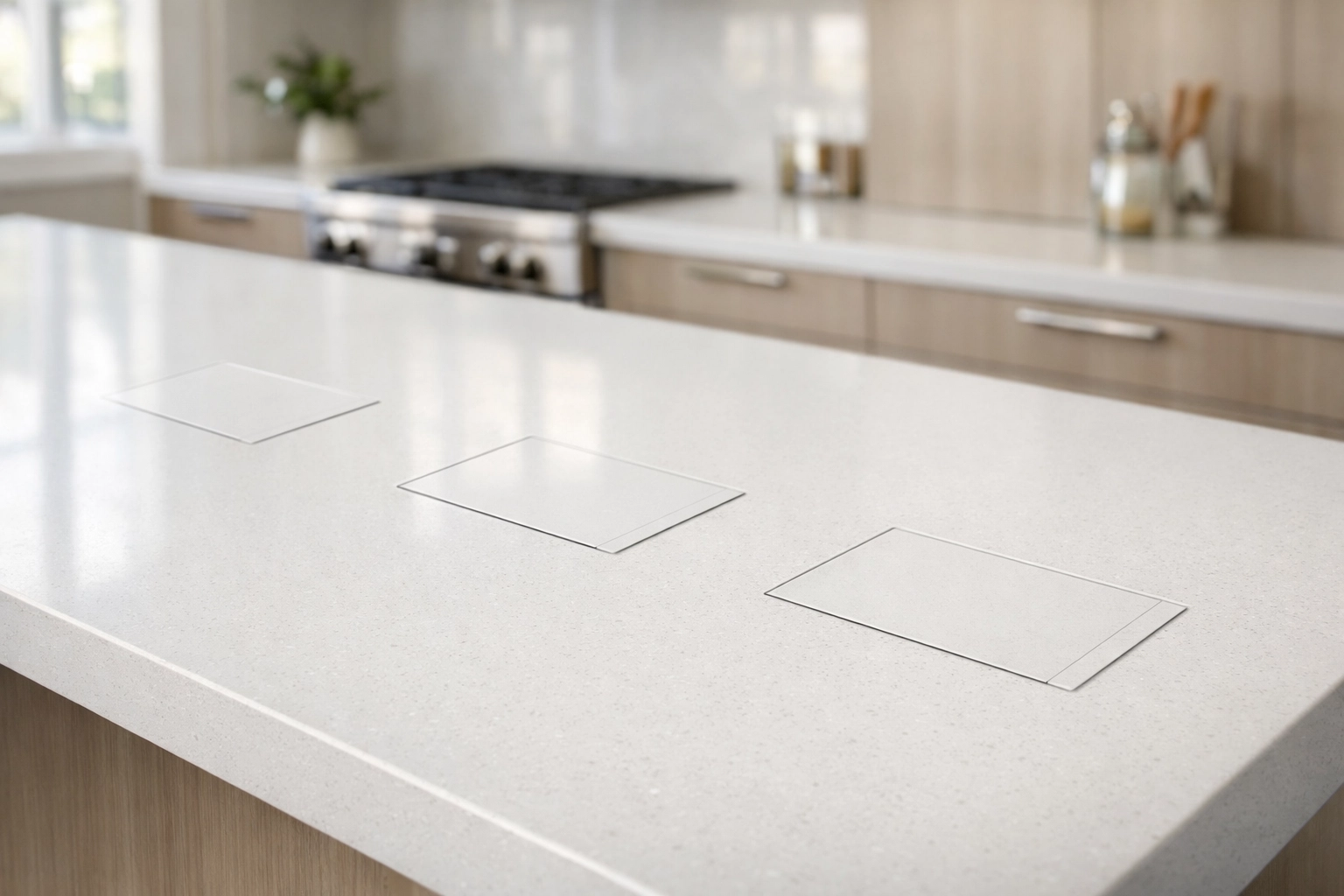
The Scottsdale standard has evolved. Your kitchen isn't competing with your neighbor's 1990s builder-grade setup; it's competing with spaces that were meticulously designed for how people actually live today. That means outlets every two feet along countertops, dedicated stations for coffee bars and baking centers, and pop-up options in islands that preserve your aesthetic while delivering function.
Mistake #2: Treating Lighting Like an Afterthought
You spent weeks selecting the perfect pendant lights. They're gorgeous: sculptural pieces that could hang in a gallery. But can you actually see what you're doing when you're chopping vegetables at 6 PM on a Tuesday?
Lighting in kitchens demands a layered, strategic approach. Ambient lighting sets the mood. Task lighting ensures you can prep food safely without casting shadows across your work surface. Accent lighting highlights your architectural features and creates depth. Most homeowners focus exclusively on that first category and wonder why their kitchen feels flat or: worse: why they keep discovering they've mismeasured ingredients.
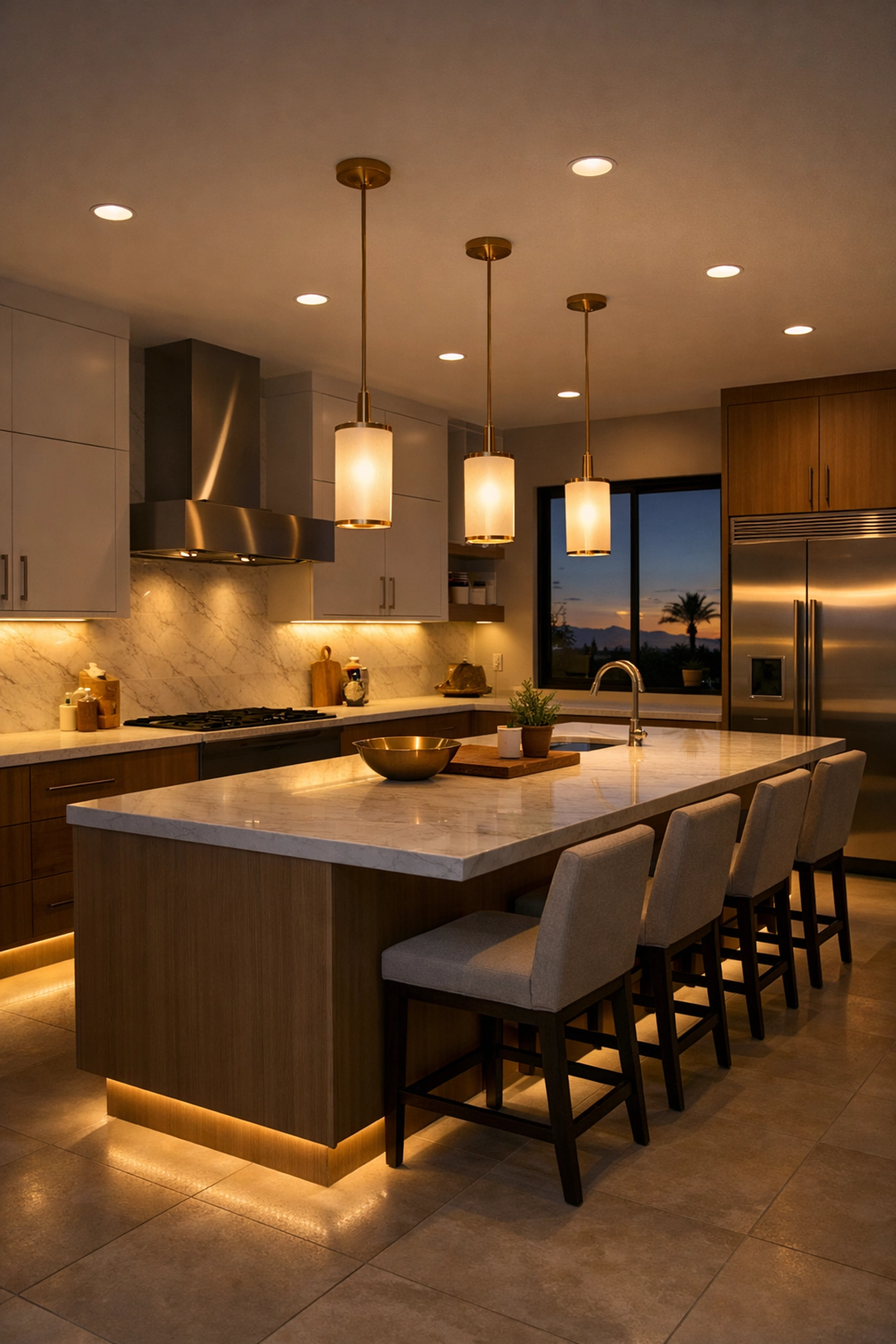
Under-cabinet lighting isn't optional; it's essential. Recessed lighting over islands needs to be positioned precisely: not based on what looks symmetrical on a blueprint, but based on where you'll actually be standing. And don't forget about inside cabinets, pantries, and even toe-kick lighting that adds both safety and ambiance when you're navigating your kitchen after dark.
The Scottsdale heat means we're often cooking after sunset to avoid running the oven during peak afternoon temperatures. Your lighting system needs to support that lifestyle, not fight against it.
Mistake #3: The Shared Circuit Disaster
Nothing says "we didn't think this through" quite like having your refrigerator shut off every time someone runs the microwave. Yet this scenario plays out in remodeled kitchens across Scottsdale with disturbing frequency, and it stems from a fundamental misunderstanding of electrical load management.
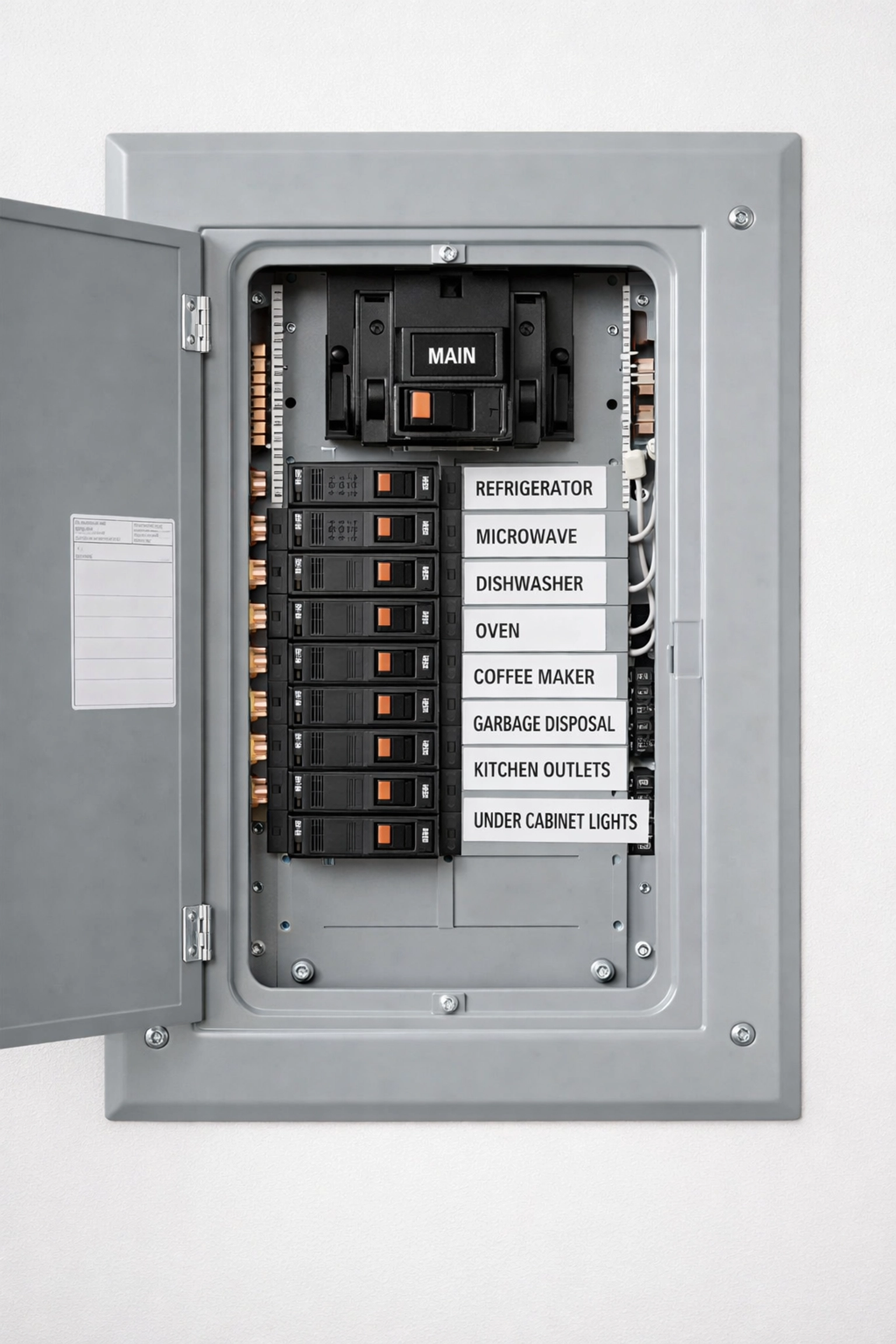
Modern appliances demand serious power. Your refrigerator, dishwasher, garbage disposal, microwave, and range each deserve their own dedicated circuit. When contractors cut corners by sharing circuits among multiple high-draw appliances, they're essentially creating an electrical game of musical chairs where somebody always loses.
We're talking about more than inconvenience here: we're talking about safety. When circuits become overloaded, breakers trip. That's the safety mechanism working. But repeatedly overloading circuits degrades the system over time, creates fire hazards, and can damage your expensive appliances. That Sub-Zero refrigerator? It wasn't designed to handle the electrical hiccups caused by sharing a circuit with your disposal.
A properly designed kitchen electrical system treats each major appliance as a separate entity with its own power supply. It's not sexy, it's not visible, but it's the difference between a kitchen that works flawlessly and one that requires you to strategically stagger when you use different appliances.
Mistake #4: The "It's Fine" Approach to Code Updates
Here's a conversation we have more often than we'd like: "Can't we just add a few outlets without rewiring everything?" The short answer is no. The longer answer involves understanding that electrical codes exist for reasons written in the lessons of house fires, electrocutions, and insurance nightmares.
When you touch existing electrical work during a remodel: extending circuits, adding outlets, upgrading fixtures: you're required by Arizona law to bring those systems up to current code. This isn't a contractor upselling you; it's a legal requirement and a safety imperative. Those codes have evolved as our understanding of electrical safety has improved, as appliances have become more powerful, and as building materials have changed.
GFCI (Ground Fault Circuit Interrupter) protection, for instance, is now required for kitchen outlets. If your existing kitchen lacks this protection, you can't simply add outlets to the old system and call it done. Arc-fault circuit interrupters, proper grounding, appropriate wire gauges for the loads they're carrying: these requirements exist because houses burned down and people got hurt when they didn't.
Scottsdale's luxury home market means inspectors pay close attention. Attempting to skirt code requirements might save money initially, but it'll cost you exponentially more when it's time to sell, when an inspection reveals the shortcuts, or when your insurance company discovers non-compliant work after an incident.
Mistake #5: The DIY Electrical Experiment
YouTube has convinced an entire generation that they can tackle any home improvement project with enough confidence and a tools from Harbor Freight. Kitchen electrical work is emphatically not one of those projects.
We've witnessed the aftermath: homeowners who spent months and significant money creating their dream kitchen, only to hire us to tear apart the new backsplash because the wiring behind it is dangerously incorrect. The fixtures that flicker. The outlets that spark. The circuits that mysteriously trip. The GFCI protection that was installed incorrectly and therefore provides no actual protection.
Electrical work demands more than watching installation videos: it requires understanding load calculations, proper wire sizing, connection techniques that won't loosen over time, code compliance for commercial-grade appliances, and the experience to anticipate problems before they occur. When DIY electrical work fails, it doesn't just fail aesthetically; it fails in ways that endanger your family and your investment.
Consider this: would you perform surgery on yourself after watching medical videos? The stakes in electrical work might not seem as immediate, but fire and electrocution are remarkably unforgiving teachers. Professional electrical contractors carry licensing, insurance, and accountability that protects you when something goes wrong.
Mistake #6: Underpowering Your Lifestyle
Scottsdale homeowners have particular tastes: we're talking Wolf ranges, multiple beverage refrigerators, commercial-grade ventilation systems, heated towel drawers, and smart appliances that communicate with your home automation system. These aren't your grandmother's kitchen appliances. They're powerhouses that demand robust electrical infrastructure.
Yet we routinely see remodels where homeowners select these high-performance appliances and then discover their existing electrical panel can't support the load. Or worse, they discover it mid-remodel, when the contractor realizes the 100-amp service that's been handling the house for decades won't accommodate the additional 40 amps of kitchen appliances being added.
Panel upgrades aren't optional when you're upgrading your lifestyle. That 100-amp or 150-amp panel might have been adequate when the house was built, but add a modern kitchen, and EV charger, solar panels, and smart home systems, and you've exceeded capacity. A panel upgrade isn't just about accommodating your current kitchen plans: it's about ensuring your home's electrical system can support your life for the next 20 years.
The wiring gauge matters too. Kitchens require heavier gauge wire than living areas because they carry substantially more current. Trying to run high-powered appliances on undersized wire creates heat, voltage drops, and safety hazards. Professional electrical design accounts for both your current appliance lineup and reasonable future additions.
Mistake #7: Forgetting the Future is Smart
You're designing your kitchen for today, but what about tomorrow? Smart home integration isn't a luxury anymore: it's rapidly becoming the standard, especially in Scottsdale's competitive real estate market. Yet countless kitchen remodels overlook the infrastructure needed to support this technology.
Smart refrigerators that notify you when food is expiring. Faucets that dispense precise measurements. Lighting that adjusts throughout the day to support your circadian rhythm. Outlets with integrated USB charging. Voice-controlled appliances that respond to your commands. These technologies require both power and data connectivity, and retrofitting them into a finished kitchen costs exponentially more than planning for them initially.
We're not suggesting you need to install every smart device available: we're suggesting you create the infrastructure so you can adopt these technologies as they become relevant to your lifestyle. That means running CAT6 data lines, ensuring adequate power at strategic locations, installing smart switches compatible with home automation systems, and designing your electrical layout to accommodate both hardwired and wireless smart devices.
The smart home integration discussion should happen during the planning phase, not after your walls are closed up. Consider where you might want motorized window treatments, where smart displays might live, how your lighting system might integrate with your entertainment setup. These conversations seem premature until you're trying to figure out how to add them later without destroying your new finishes.
The Scottsdale Standard Demands Excellence
Your kitchen remodel represents a significant investment in both your daily quality of life and your home's value. In Scottsdale's discerning market, half-measures don't just fail to impress: they actively detract from your home's appeal and functionality. The electrical system might not be visible in your Instagram photos, but it's the difference between a space that looks good and one that performs brilliantly.
These seven mistakes are entirely avoidable. They require nothing more than working with professionals who understand that modern kitchens demand sophisticated electrical design, who plan for your actual lifestyle rather than minimum code requirements, and who recognize that doing it right the first time is always less expensive than doing it twice.
Whether you're planning a complete kitchen renovation or updating specific elements, the electrical planning deserves the same attention you're giving to your countertop selection and cabinet design. Because ultimately, the most beautiful kitchen in Scottsdale is worthless if you can't actually power the life you want to live in it.
Ready to design a kitchen that's as functional as it is beautiful? Let's talk about creating an electrical system that supports your vision: not just today, but for decades to come. That's the promise of working with professionals who understand that true luxury isn't just about aesthetics; it's about crafting spaces that work flawlessly, every single time.
Comments