
EV Charger Installation in Scottsdale: Do You Really Need a Panel Upgrade?
You've finally joined the electric vehicle revolution. Your sleek new EV sits in the driveway, promising lower fuel costs, reduced emissions, and that satisfyingly futuristic hum. Now comes the practical question every new EV owner in Scottsdale faces: can your home's electrical system handle a charging station, or are you looking at a panel upgrade?
The short answer? It depends, and anyone who tells you otherwise without examining your specific home is either clairvoyant or careless.
The Reality Behind EV Charger Installation in Scottsdale
Picture this scenario: You've researched charging options, selected the perfect Level 2 charger for your garage, and you're ready to install. Then a friend mentions they needed a complete electrical panel upgrade in Scottsdale before their installation, and suddenly you're wondering if your weekend project just became a month-long renovation.
Here's what you need to understand. An EV charger installation in Scottsdale isn't simply about finding an empty breaker slot in your electrical panel, though that's certainly part of the equation. It's about determining whether your home's entire electrical infrastructure can sustain the additional continuous load without compromising safety or performance.
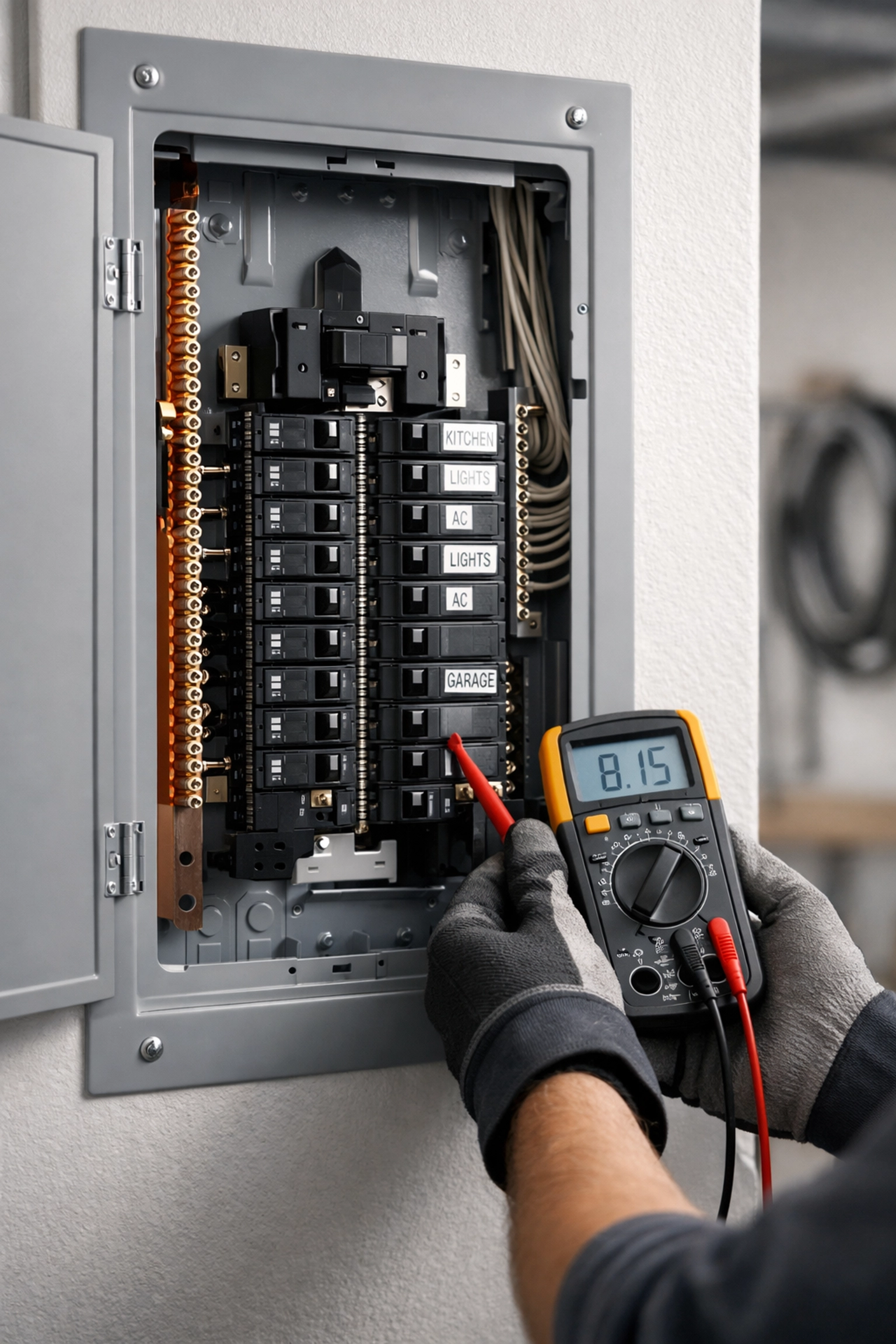
The key word there? Continuous. Unlike your microwave that draws power in short bursts or your air conditioning that cycles on and off, an EV charger operates as a sustained electrical demand for hours at a stretch. This fundamental difference changes everything about how we evaluate your electrical capacity.
What Your Electrical Panel Is Really Telling You
Think of your electrical panel as the circulatory system of your home, every circuit represents a pathway delivering power to specific areas and appliances. When you examine that gray metal box in your garage or utility room, what you're seeing is more than just switches and wires. You're looking at the command center that manages every electrical demand your household makes simultaneously.
Most Scottsdale homes built before 2000 typically feature 100-amp or 150-amp service panels. Newer construction often includes 200-amp panels as standard. These numbers aren't arbitrary, they represent your home's total electrical capacity at any given moment. The challenge emerges when you start adding up everything already drawing from that capacity: central air conditioning (a significant consideration in Arizona's climate), water heaters, pool pumps, kitchen appliances, home offices, entertainment systems, and now, your EV charger.
The Level 2 Charger Demand: More Than Meets The Eye
When we're discussing residential EV charger installation in Scottsdale, we're almost always talking about Level 2 chargers. These require a dedicated 240-volt circuit, the same type of power that feeds your electric dryer or range. They're the practical sweet spot for home charging, delivering a full charge overnight and operating far more efficiently than basic 120-volt options.
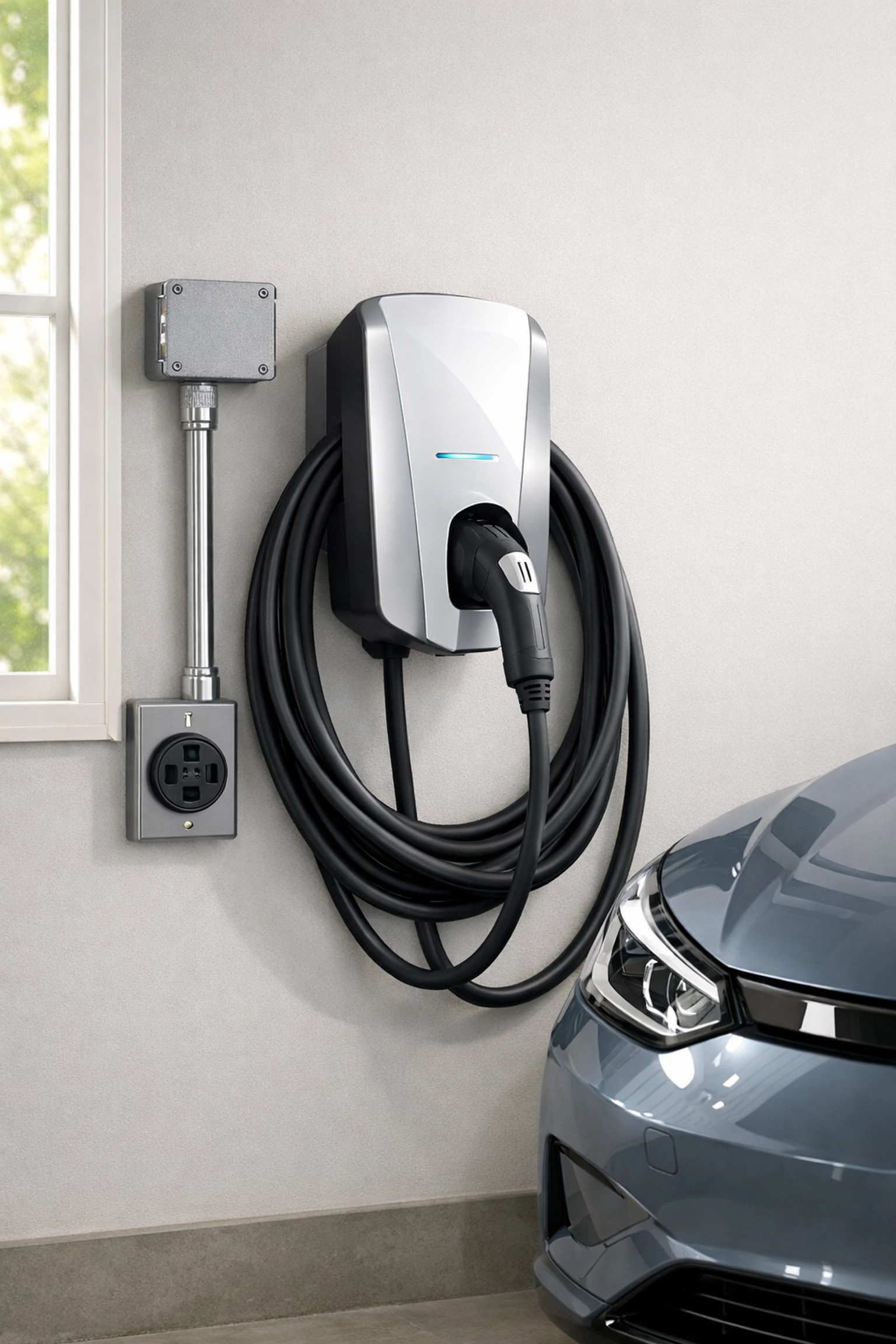
But here's where the mathematics get interesting. A typical Level 2 charger draws between 30 and 50 amps continuously during charging sessions. That's not an insignificant demand. According to the National Electrical Code (NEC), the safety standards governing all electrical work, continuous loads like EV chargers must be calculated at 125% of their actual draw when determining whether your panel can accommodate them.
This calculation isn't optional. It's a fundamental safety requirement designed to prevent overloaded circuits, tripped breakers, overheated wiring, and potentially catastrophic electrical fires. What appears as "available capacity" on paper might disappear entirely once proper load calculations account for all continuous and intermittent demands.
When Panel Upgrades Become Necessary
Imagine running a detailed audit of your home's electrical consumption during peak usage. It's a sweltering July afternoon in Scottsdale. Your air conditioning is working overtime. Someone's doing laundry. The pool pump is cycling. Dinner preparations have the oven, cooktop, and microwave running. Multiple computers and devices are charging. Now add your EV charger to that equation.
An electrical panel upgrade in Scottsdale becomes necessary when this cumulative demand exceeds your panel's safe operating capacity. The assessment examines several critical factors:
Available Panel Capacity , Does your total electrical service provide sufficient amperage to accommodate an additional 30-50 amp continuous load without exceeding safe limits?
Physical Breaker Space , Even if capacity exists, does your panel have available slots for the required double-pole breaker, or are all positions occupied?
Circuit Availability , Can a dedicated 240-volt circuit be routed from your panel to your desired charging location without extensive modifications?
Code Compliance , Does your existing panel meet current electrical codes, or have standards evolved since your home was built, necessitating upgrades regardless of the EV charger?
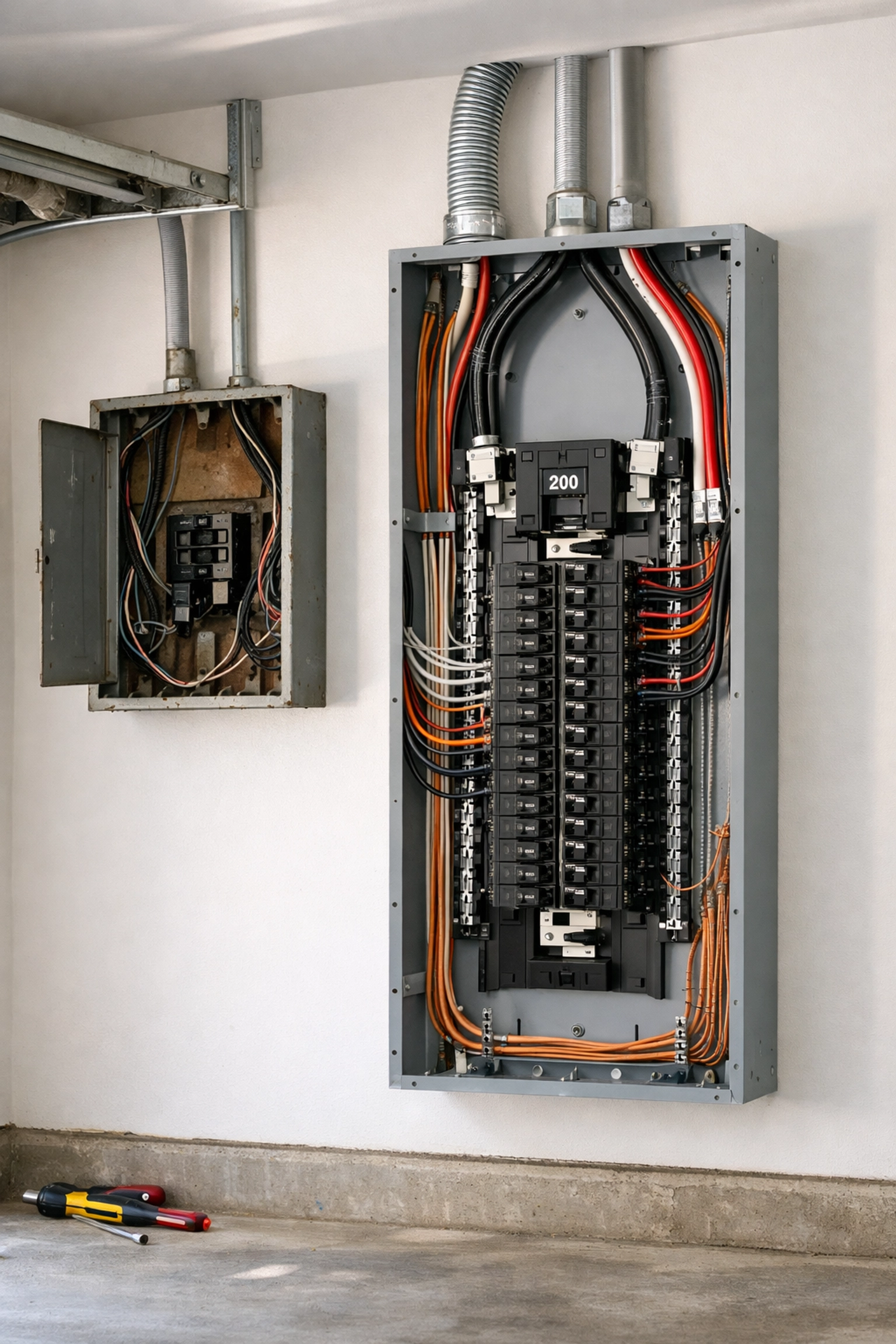
The truth many homeowners discover is that older panels, particularly those 100-amp services installed decades ago, frequently lack the headroom for modern electrical demands even before introducing EV charging into the mix. In these situations, the panel upgrade isn't an unfortunate complication; it's an essential modernization that fortifies your entire home's electrical infrastructure.
The Professional Assessment: Non-Negotiable and Invaluable
Here's what separates responsible EV charger installation in Scottsdale from potentially dangerous shortcuts: the formal load calculation performed by licensed electricians. This isn't a cursory glance at your breaker box. It's a meticulous evaluation involving:
Comprehensive measurement of your home's total connected load
Analysis of your largest appliances and their demand patterns
Calculation of diversity factors (the reality that not everything operates simultaneously at maximum capacity)
Evaluation of existing wire gauges and conduit pathways
Assessment of your utility service connection and capacity
Determination of the safest, most efficient routing for new circuits
This assessment reveals not just whether your current panel can accommodate the charger, but how the installation should be executed to optimize performance, maintain safety margins, and comply with all applicable codes. It's the difference between a charging station that operates flawlessly for years and one that trips breakers during high-demand periods or, worse, creates hidden fire hazards.
At Innovative Electric & Design, we approach every EV charger installation in Scottsdale with this comprehensive mindset. We're not simply connecting wires and mounting equipment, we're integrating sophisticated charging technology into your home's electrical ecosystem in a manner that preserves safety, enhances reliability, and prepares your infrastructure for future demands.
The Upgrade Advantage: Beyond Just EV Charging
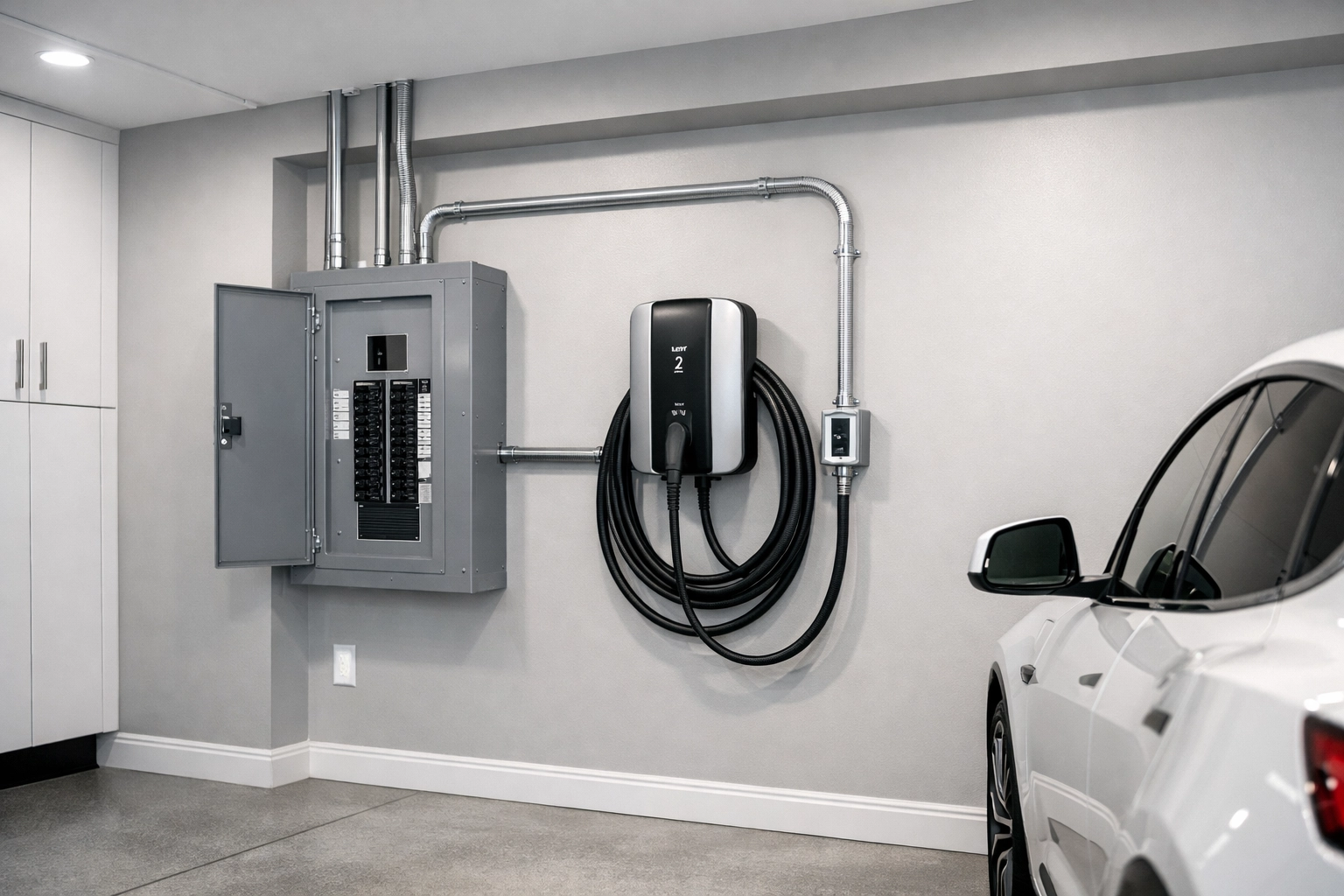
When an electrical panel upgrade in Scottsdale becomes necessary for your EV charger installation, consider the broader implications. Yes, you're investing more than you initially anticipated. But you're also fundamentally strengthening your home's electrical foundation.
Modern panels provide increased capacity for future additions: perhaps that outdoor kitchen you've been contemplating, or additional solar integration, or expanded smart home systems. They incorporate advanced circuit breakers with superior protection features. They're designed with proper spacing and organization that simplifies future modifications. And they bring your entire electrical system into compliance with current safety standards.
Think of it as fortifying the foundation while you're already renovating the first floor. The timing is strategic, the value is cumulative, and the peace of mind is considerable.
Moving Forward With Confidence
The question "Do I need a panel upgrade for my EV charger?" deserves an honest answer: maybe. Some Scottsdale homes possess ample capacity and can accommodate Level 2 charging with straightforward circuit installation. Others require panel upgrades to ensure safe, reliable operation. Only a professional evaluation of your specific property can provide definitive guidance.
What's certain is that cutting corners during this assessment or installation isn't just unwise: it's dangerous. The National Electrical Code exists for compelling reasons, and those dedicated 240-volt circuit requirements aren't bureaucratic nuisances. They're safety measures protecting your family, your home, and your investment.
Ready to explore what your home needs for seamless EV charging? Our team at Innovative Electric & Design specializes in comprehensive electrical panel upgrades and professional installations throughout Scottsdale. We'll conduct that essential load calculation, present you with clear options, and execute the installation with meticulous attention to safety and code compliance.
Let's start the conversation about powering your electric future: properly, safely, and with complete confidence. Your EV deserves more than just a charging station. It deserves an electrical infrastructure designed to support it flawlessly for years to come.
Comments